

Yes, back office outsourcing directly enhances business growth by freeing internal resources, reducing costs, improving productivity, and helping companies to focus on core revenue-generating activities.
Businesses struggle with repetitive administrative tasks that consume time and reduce efficiency. Delegating non-core operations like accounting, payroll, data management, and IT support to expert providers allows companies to focus on strategic initiatives and revenue-generating activities. Outsourcing back-office functions not only reduces operational costs but also improves service quality, accelerates workflows, and supports scalability. With specialized teams handling routine processes, companies can achieve higher productivity and stronger customer satisfaction.
In this blog, we explore how back office outsourcing drives growth, improves cost efficiency, and enhances operational effectiveness. Also highlights the benefits and challenges of solutions and how entrepreneurs can maximize outsourcing while securing their data.
Without any delay, let’s explore it below!
Key Takeaways
- Back Office Meaning & Features: Handles payroll, accounting, IT, and records to support operations.
- Growth Benefits: Frees resources, increases productivity, and allows focus on strategic initiatives.
- Cost-Effectiveness: Saves up to 50% on labor, infrastructure, and operational expenses.
- Advantages: Access to skilled professionals, scalable operations, and improved workflow efficiency.
- Challenges & Solutions: Mitigate risks with experienced vendors, KPIs, and secure data processes.
- Strategic Impact: Enhances service quality, reduces risks, and supports long-term business growth.
Meaning of Back Office
Businesses rely on back-office operations to handle essential administrative and support tasks that don’t involve direct customer interaction. These functions ensure smooth operations, compliance, and efficiency, allowing front-office teams to focus on revenue and client relationships.
Key Features:
- Payroll, accounting, and data entry
- IT support and system management
- Record-keeping and compliance
- Accuracy and operational efficiency
- Supports core business functions
- Can be outsourced for cost savings
In 2021, the market for back office outsourcing was estimated to be worth USD 245.9 million. From 2022 to 2030, it is anticipated to increase at a CAGR of 9.1%.
7 Reasons Why Back Office Outsourcing Drives Business Growth
Outsourcing back office functions allows businesses to focus on core activities while improving operational efficiency. It helps companies save costs, access skilled professionals, and streamline processes, creating opportunities for sustainable growth and scalability.
Here’s why outsourcing your back office can become a powerful driver for business growth:
- Resource Reallocation: Outsourcing back-office tasks frees internal resources, allowing employees to focus on strategic initiatives, revenue generation, and business expansion instead of time-consuming administrative work.
- Enhanced Productivity: Specialized outsourcing teams handle repetitive tasks efficiently, reducing errors and delays, which increases overall productivity and allows core teams to concentrate on high-impact activities.
- Cost Efficiency: By leveraging existing infrastructure and affordable labor, businesses can significantly reduce overhead expenses while maintaining quality and accelerating operational processes.
- Scalability: Outsourcing provides flexibility to scale operations quickly without the need to invest in additional staff, office space, or technology resources, supporting business growth.
- Access to Expertise: Outsourcing partners bring skilled professionals with experience in industry-specific tools, technologies, and compliance requirements, improving service quality and operational accuracy.
- Improved Customer Focus: Delegating administrative functions allows front-office teams to enhance customer service, meet deadlines more efficiently, and deliver better client satisfaction consistently.
- Risk Management: Expert outsourcing providers implement robust processes, data security measures, and compliance protocols, reducing operational risks and ensuring smoother business operations.
By outsourcing back-office operations, businesses can save costs, boost productivity, access specialized talent, and scale efficiently. This strategic approach allows companies to focus on core growth areas while maintaining operational excellence and customer satisfaction.
Cost-Effectiveness of Back Office Outsourcing
Outsourcing back-office functions can significantly reduce costs while improving efficiency. The table below highlights key areas of savings and their estimated impact on business operations:
| Aspect | Estimated Savings |
| Labor Costs | 40–50% |
| Infrastructure & Tools | 30–40% |
| Operational Efficiency | 20–30% |
| Scalability | 25–35% |
| Risk Management | 15–25% |
| Focus on Core Activities | 35–45% |

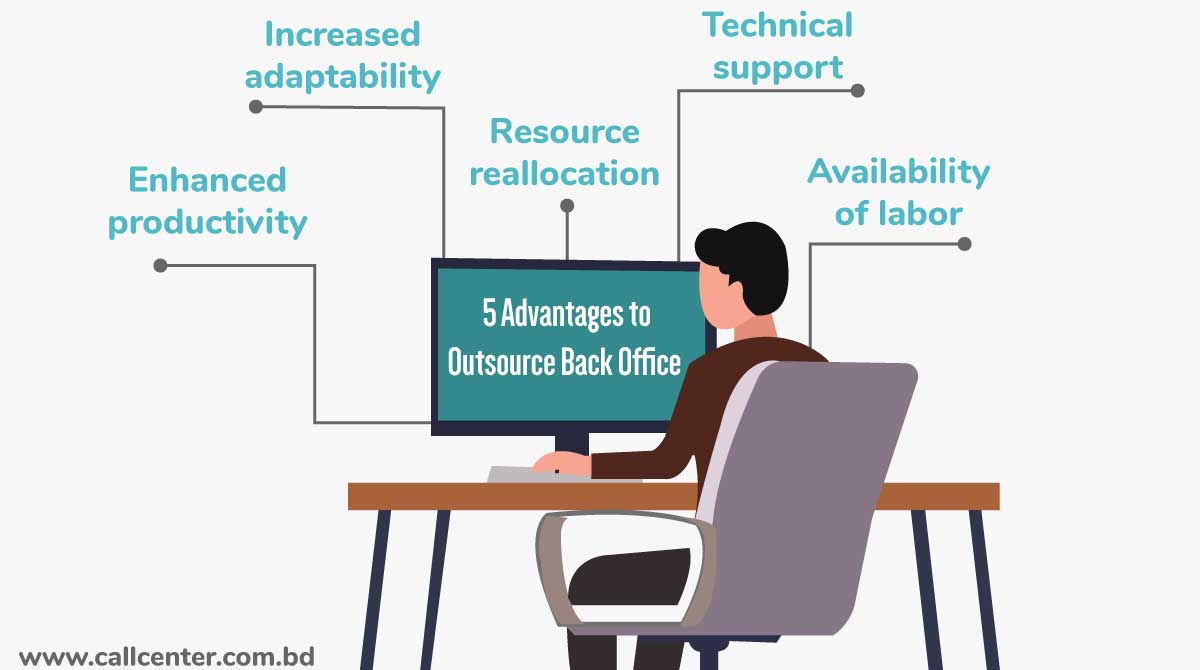
5 Advantages of Outsourcing Your Back Office
- Reallocation of Resources: Outsourcing frees up funds and headcount for strategic initiatives, such as sales, marketing, and innovation, enabling businesses to focus on high-impact areas.
- Improved Productivity: Access to specialized outsourcing teams enables organizations to increase output without incurring additional employee costs.
- Enhanced Flexibility: Businesses can scale operations or invest in growth initiatives without additional internal infrastructure or capital expenditures.
- Expert Technical Support: Outsourcing companies provide experienced professionals trained in the latest tools and technologies, ensuring high-quality back-office support.
- Labor Availability: By outsourcing, companies avoid the time-consuming recruitment and training process, gaining immediate access to a skilled workforce.
Common Challenges and How to Overcome Them
While outsourcing brings many benefits, it also comes with potential challenges:
- Data Security Risks: Sensitive business information may be exposed when shared with an external provider.
Solution: Verify security policies, encryption standards, and data handling practices before partnering with a provider.
- Quality Control Issues: Outsourcing may reduce direct oversight of operations, affecting quality.
Solution: Choose a vendor who prioritizes your business goals and allows real-time monitoring of workflows.
- Cultural and Language Barriers: Offshore outsourcing can lead to miscommunication or misunderstandings.
Solution: Partner with experienced international providers familiar with cross-cultural communication.
- Maintaining Oversight: Continuous supervision is necessary to ensure timely and accurate service delivery.
Solution: Implement regular reporting, KPIs, and collaborative tools to maintain control.
Final Words
Back office outsourcing offers businesses a strategic advantage by reducing costs, improving operational efficiency, and providing access to skilled professionals. By delegating non-core tasks like accounting, payroll, and data management, companies can focus on innovation, revenue generation, and delivering better customer experiences.
Moreover, outsourcing enables scalability, risk reduction, and enhanced productivity without significant investment in infrastructure or staff. It allows businesses to allocate resources toward core growth areas, making back office outsourcing a powerful tool for sustainable success and long-term competitive advantage.
Frequently Asked Questions
Is back office outsourcing cost-effective?
Yes. Businesses can save up to 50% compared to in-house operations by leveraging affordable labor, existing infrastructure, and specialized expertise from outsourcing providers.
Can outsourcing back office operations improve efficiency?
Absolutely. Skilled outsourcing teams handle repetitive tasks efficiently, reduce errors, ensure faster turnaround times, and allow core teams to focus on strategic priorities.
How secure is data when outsourcing back office functions?
Data security is a top priority. Reputable outsourcing providers use encryption, compliance protocols, and secure data management practices to protect sensitive business information.
Is back office outsourcing suitable for small businesses?
Yes. Small and medium-sized enterprises can benefit by reducing overhead costs, accessing skilled professionals, and focusing on growth without investing heavily in infrastructure or staff.